project scope
How might we support and empower young entrepreneurs in Gulu and Jinja to acquire skills that enable them to run businesses that are sustainable in-order to improve their lives & create jobs?
the objective
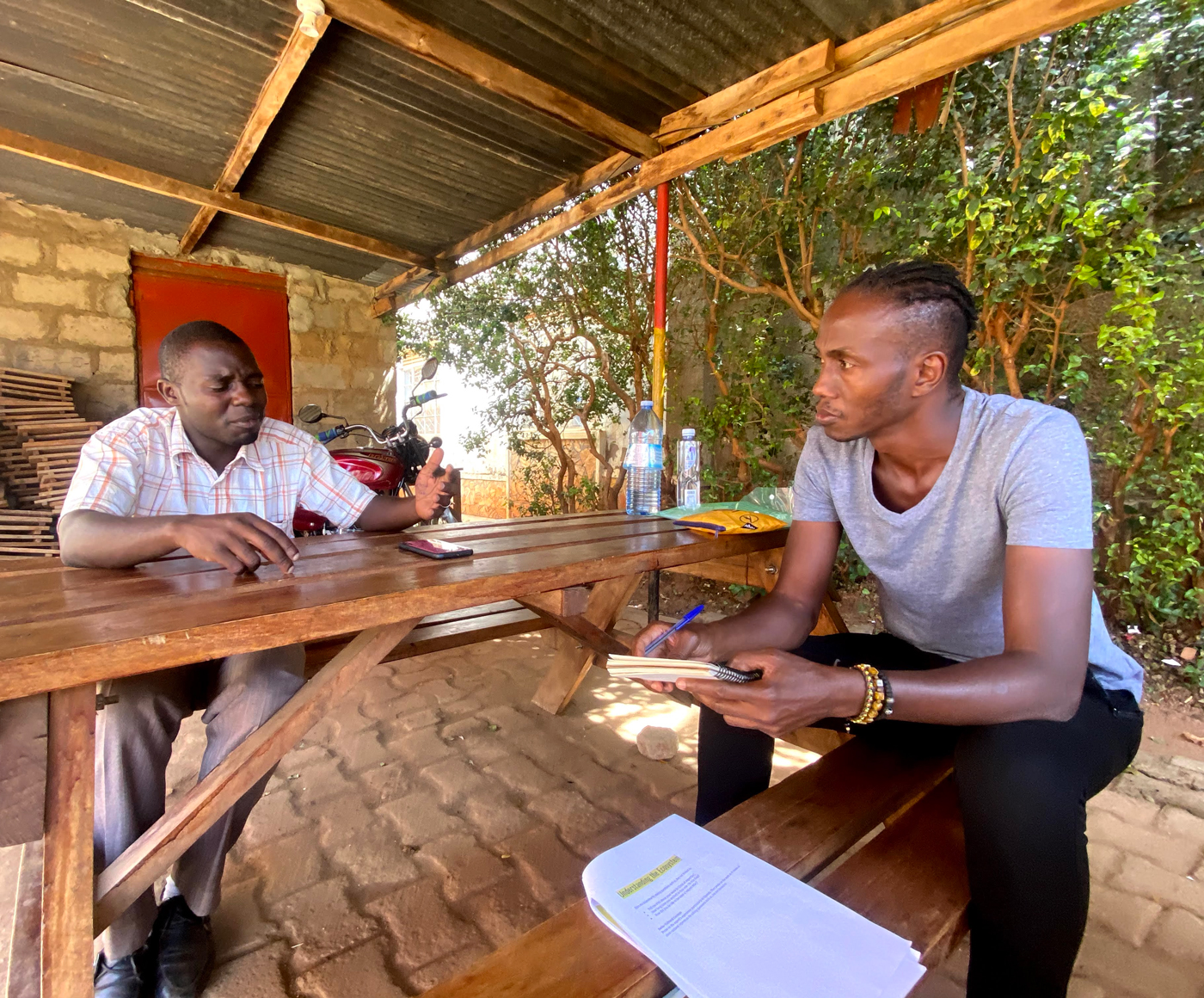
Our aim was to understand the needs, goals and current experiences of entrepreneurs, ecosystem builders and community managers. These behavioural insights will, in turn, inform solutions that seek to inspire new futures for the entire entrepreneurship ecosystem in Uganda and drive towards the goal of reaching over 300,000 young entrepreneurs.
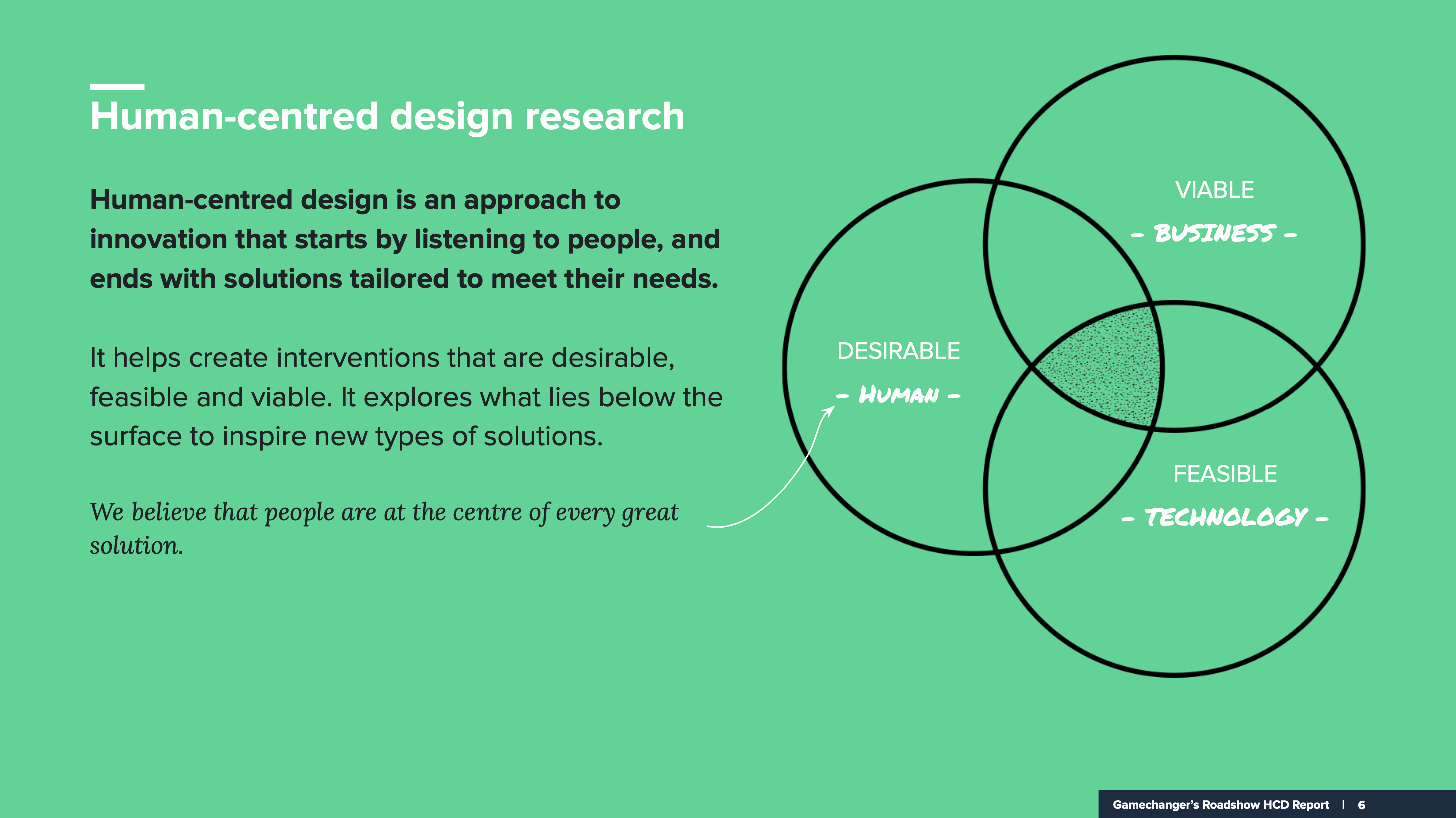
our approach
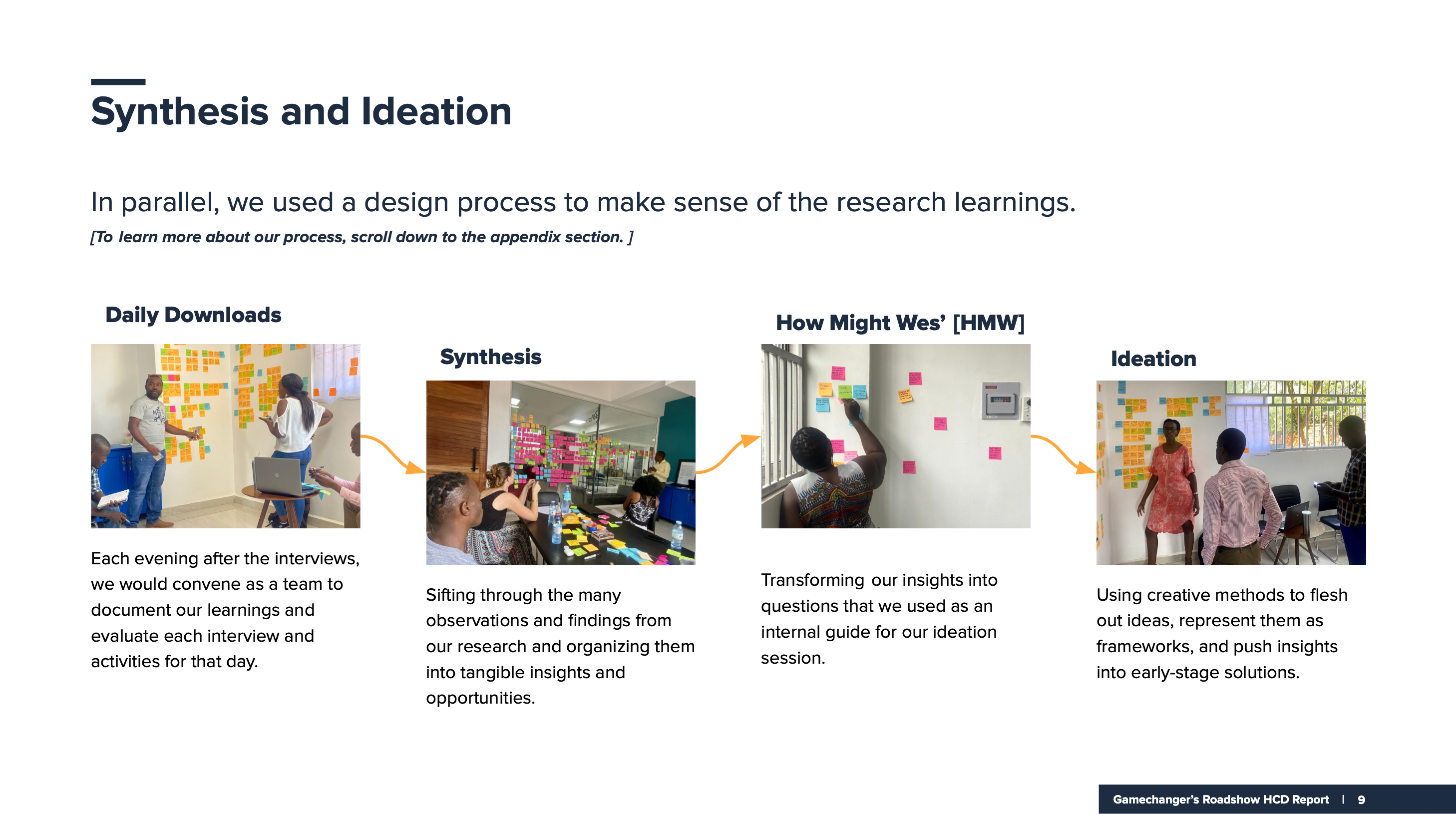
the process
Insights & Stories
"Providing young people with technical skills is the only way we can defeat this enemy called poverty. Out of the 700 young people from my programs, at least 80% are doing something for themselves"
- Pastor Alfred (inset in photo below), community leader and founder of Macedonian Vocational Institute located in Masese slums, Jinja.
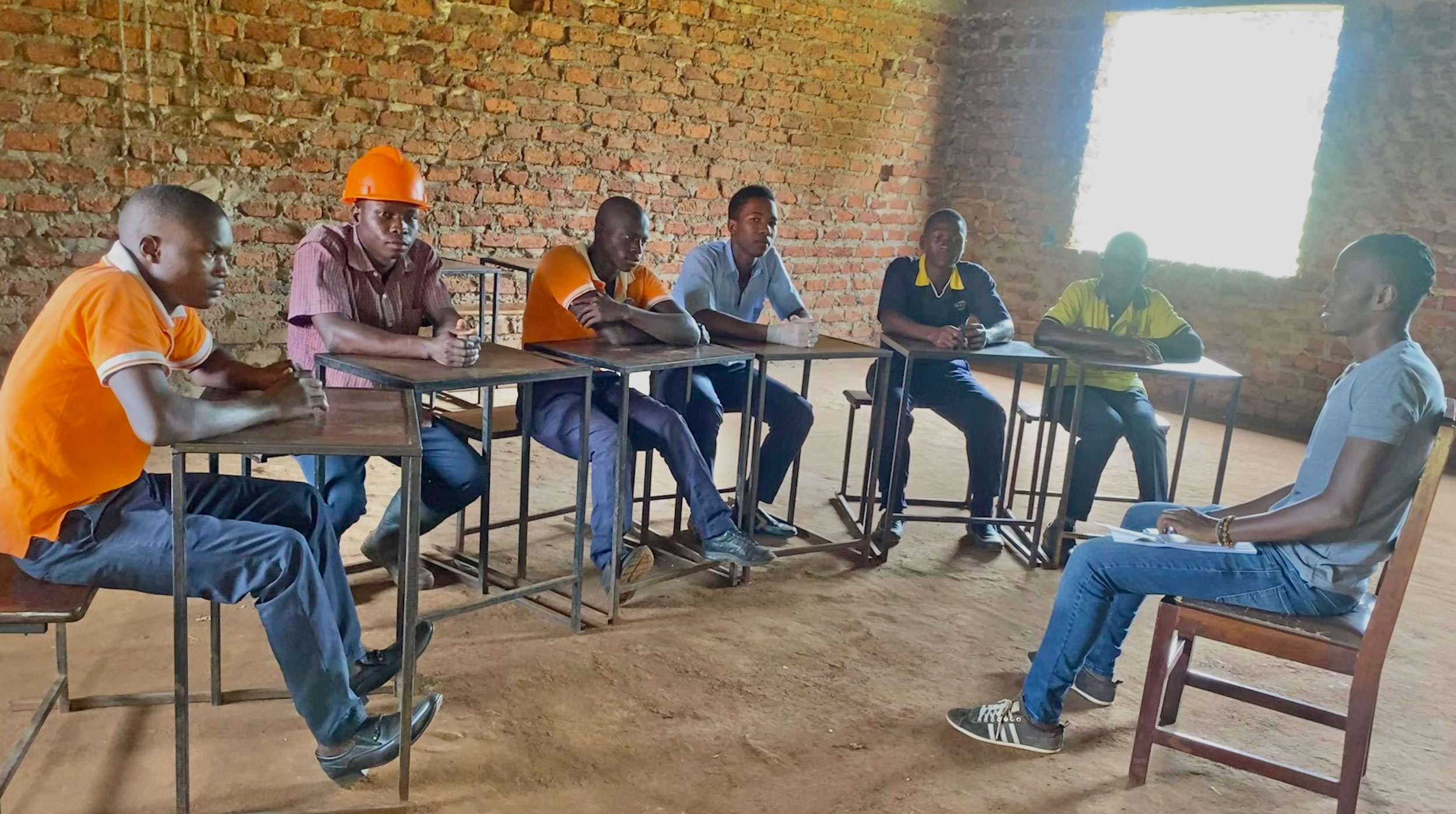
We conducted focus group discussions with some of the students to identify their aspirations and gauge their attitudes towards entrepreneurship.
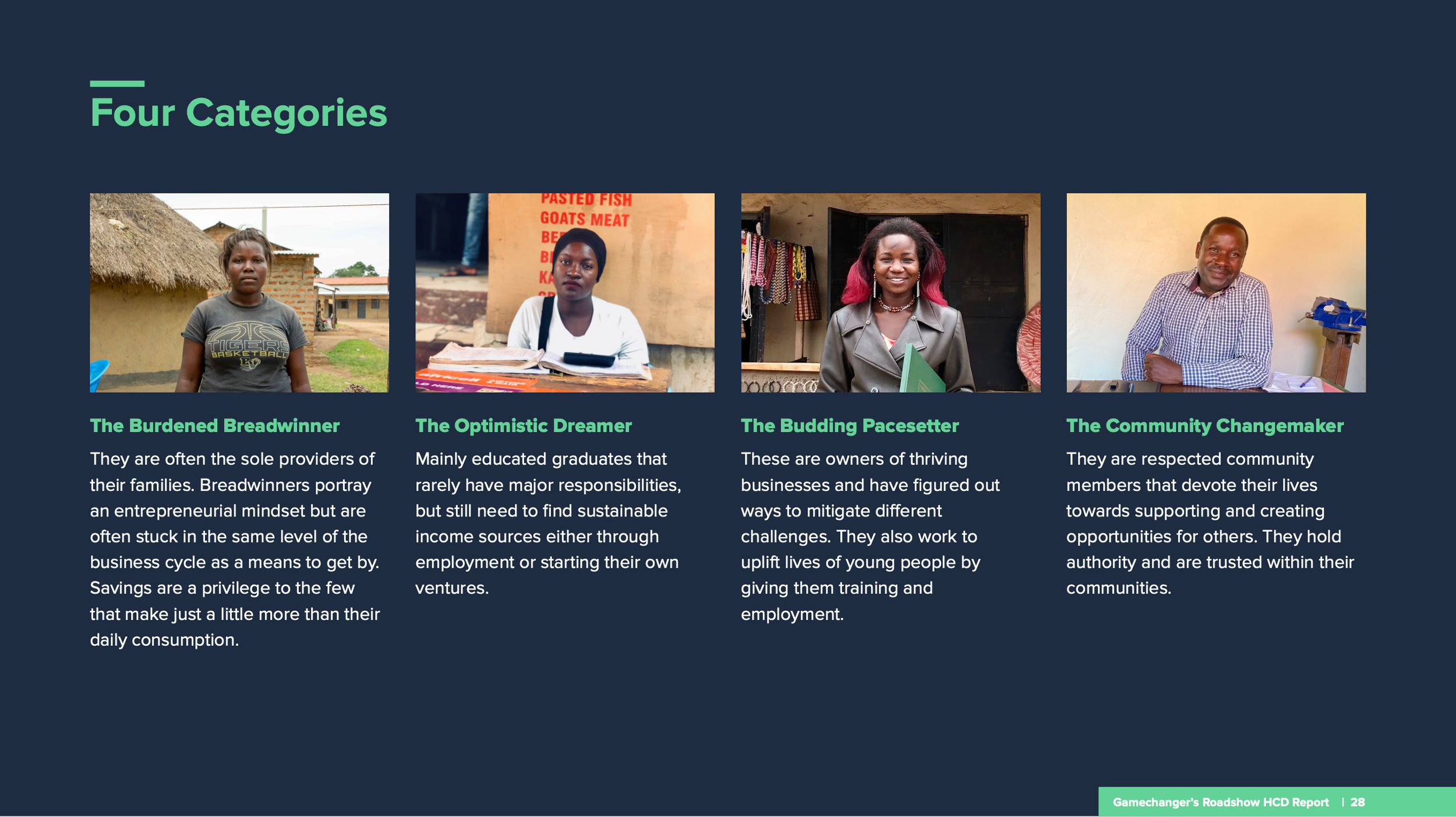
BEHAVIOURAL ARCHETYPES
Across our research we met different entrepreneurial archetypes who represent a typical example of user behaviour or motivation and attitude towards various things.
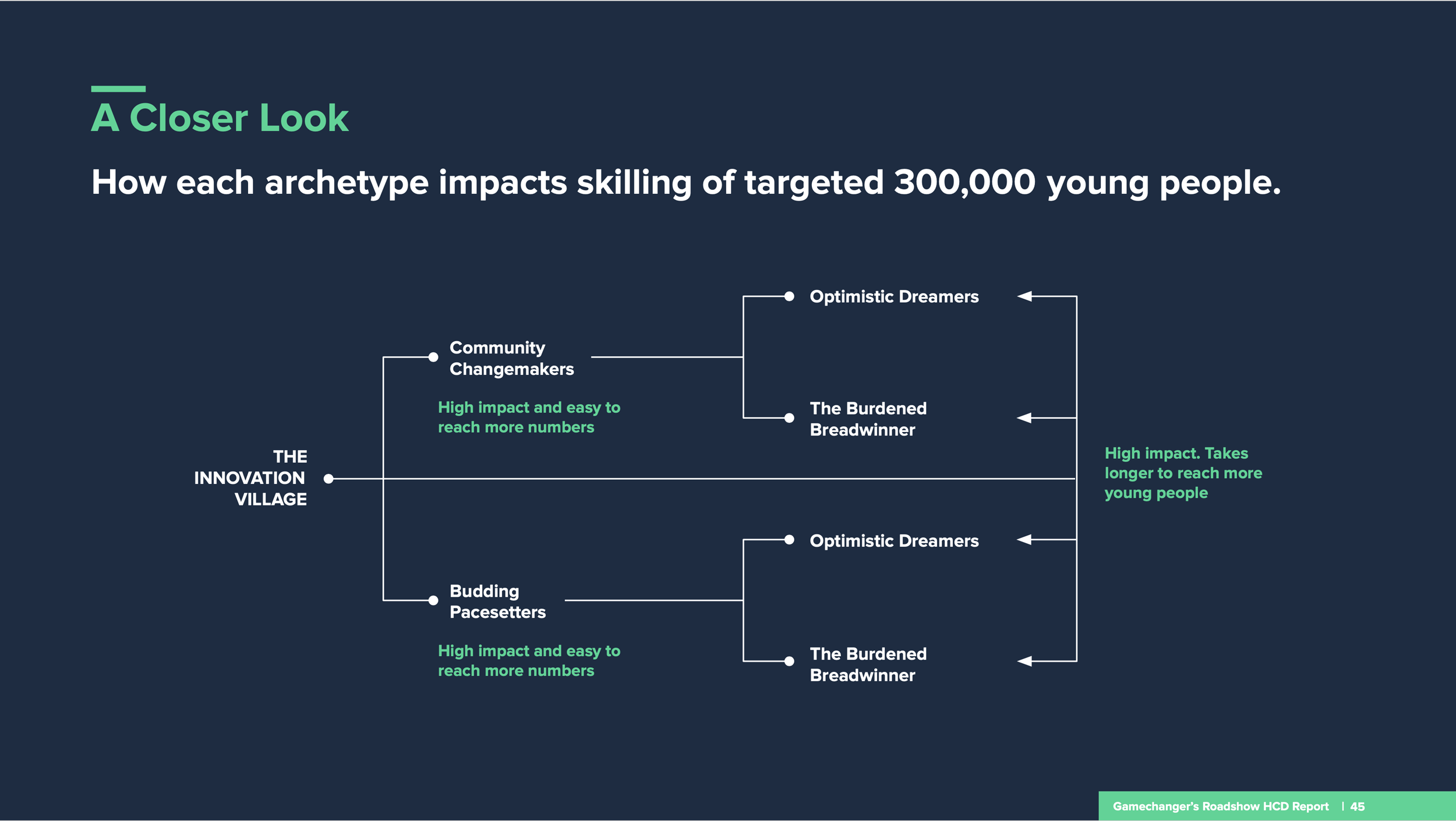
OPPORTUNITY AREAS
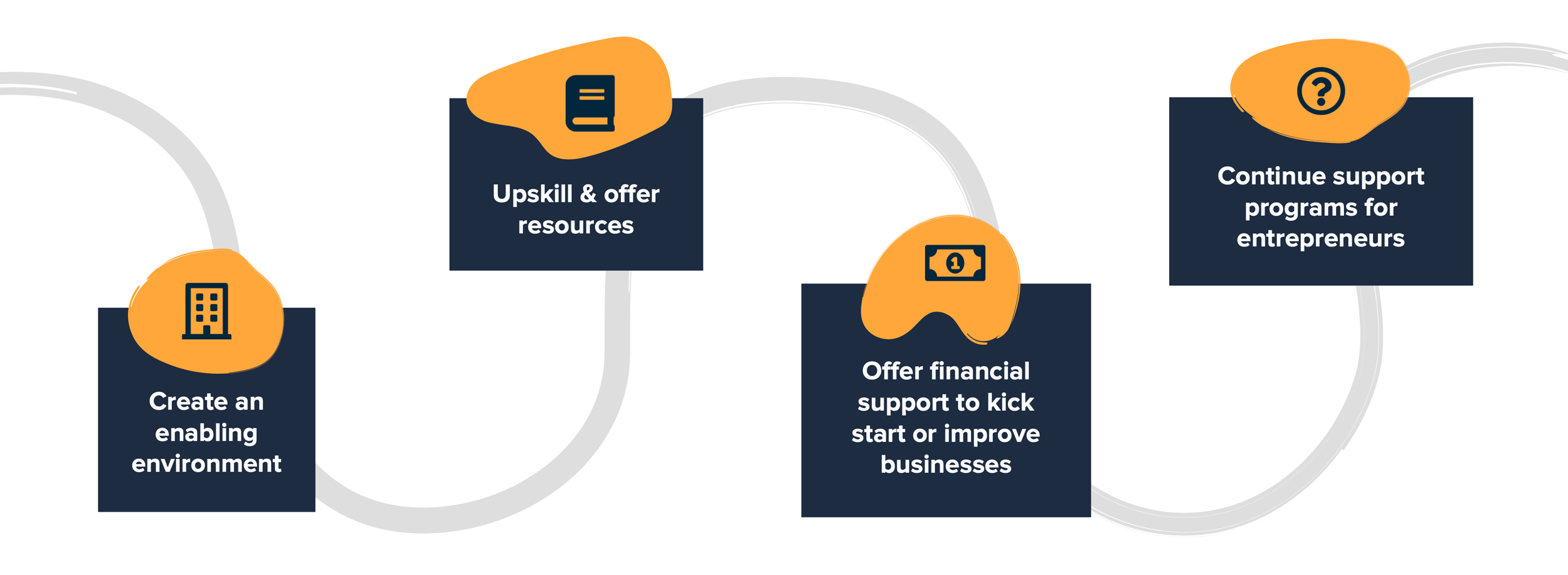
These are the four pillars of success for The Innovation Village that stood out from our research.
what's next?
At the end of the report we proposed a live prototyping approach to test and try some of the concepts. This ideas have implicit and explicit assumptions about value creation. “LIVE” prototyping allows us to measure actual behaviours in context.
By doing this at an early stage, it will enable The Innovation Village to surface and propose designs around the assumptions. It also helps in reducing risk and increases potential impact.