user analysis
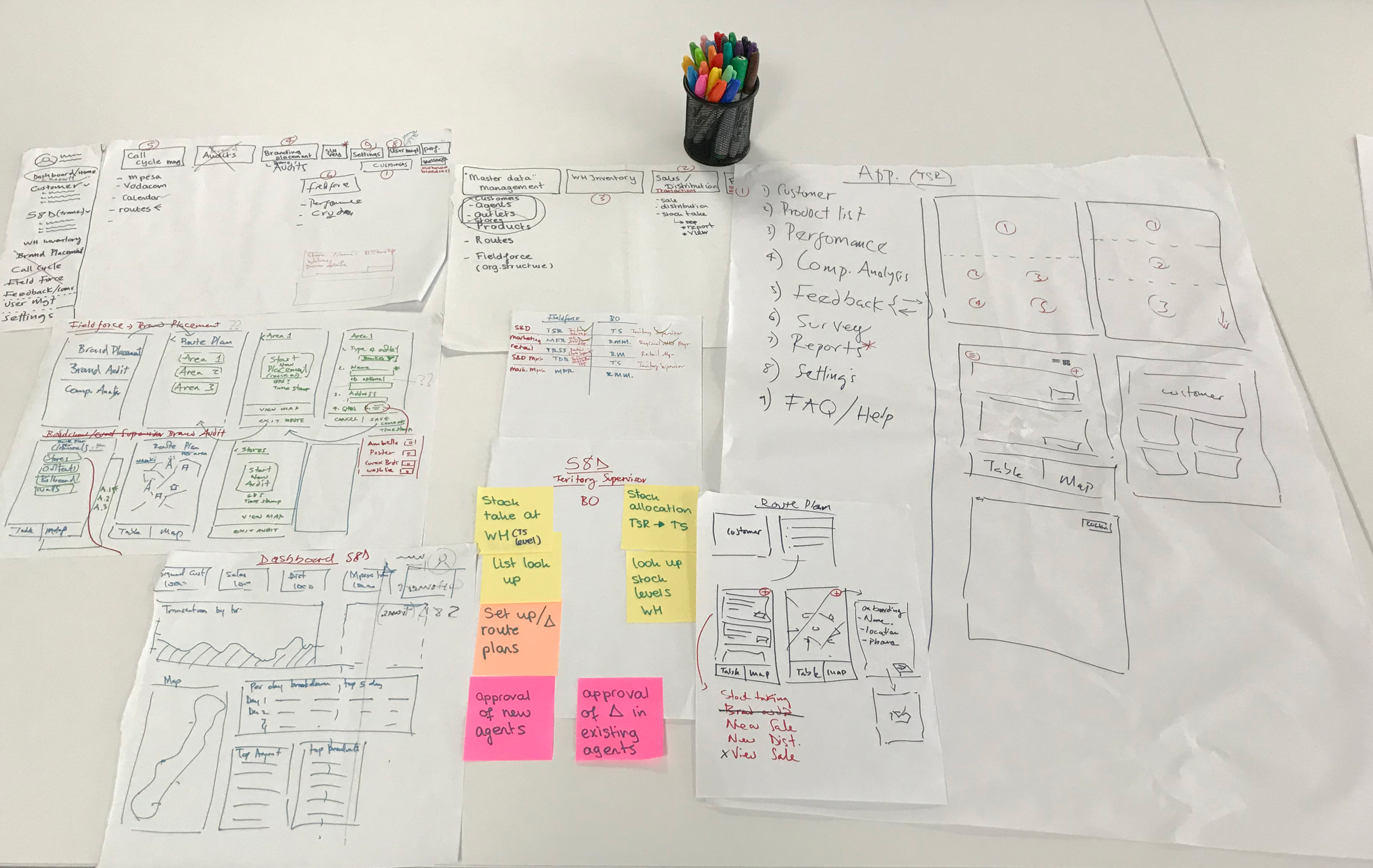
The user list was drawn from both the mobile app and the reporting dashboard and fell under the following categories;
- Marketing Team
- Sales & Distribution Team
- Retail Team
- Teritory Supervisors
- Systems Administrators
field research
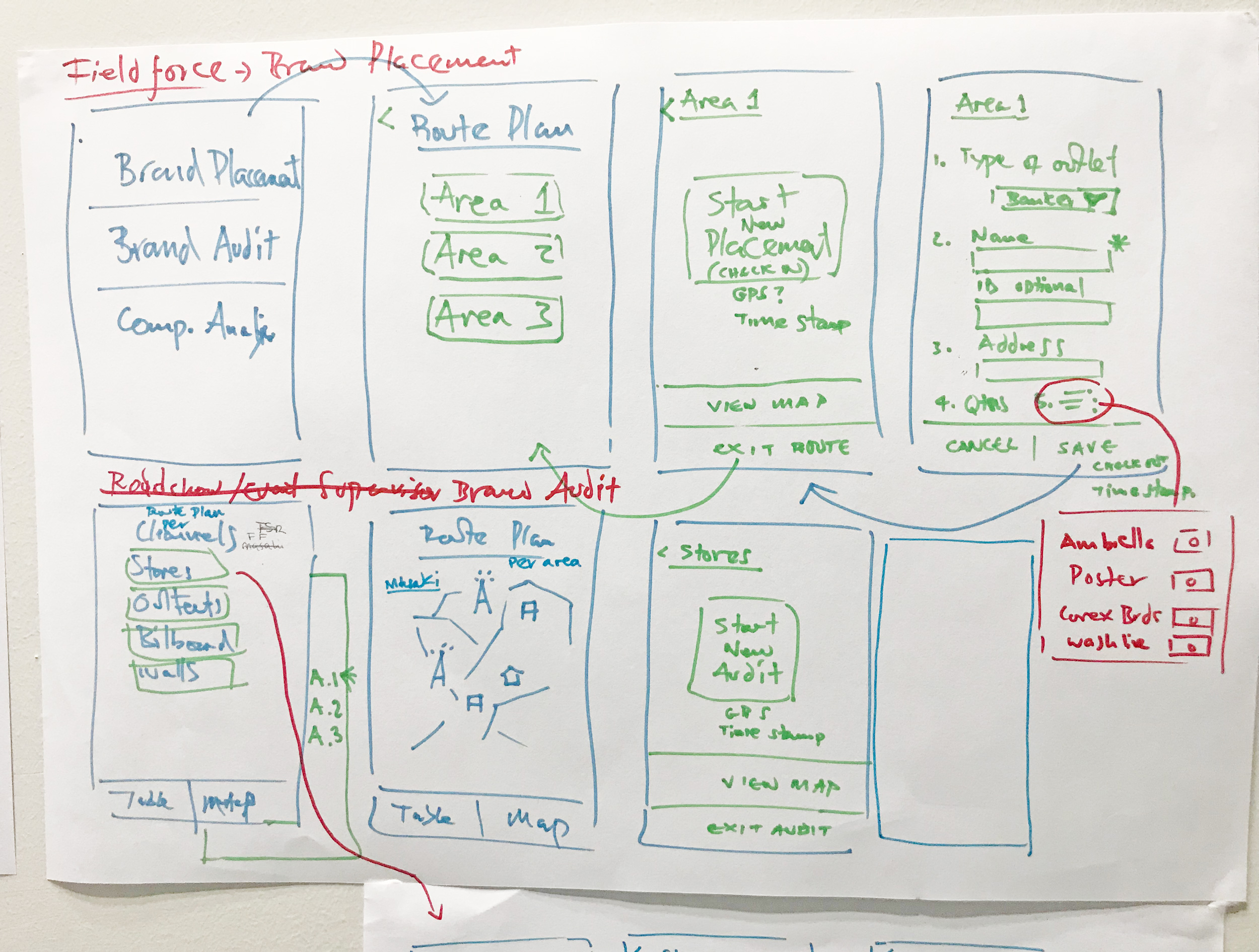
Armed with a basic outline of the product, a team from R&D was sent out to Mozambique with to gather insights on the ground. This included interviews, observation and sometimes shadowing certain users as they went on their day so as to gain deeper understanding of their tasks and pain points. This new empirical data helped us validate earlier assumptions and shed more light on the direction of the project. We now had enough to create the first set of low fidelity wireframes that would constitute an MVP.
wireframes
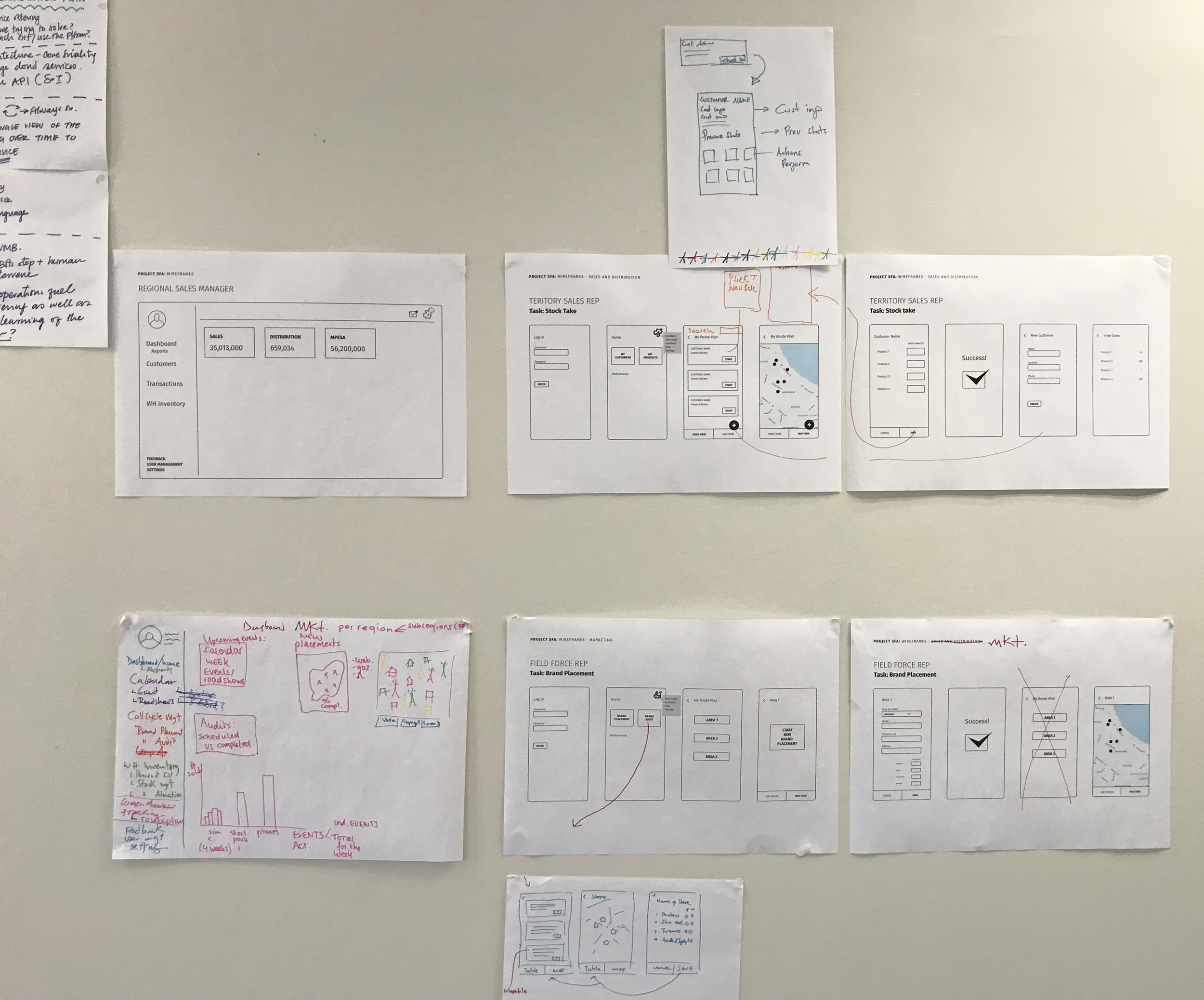
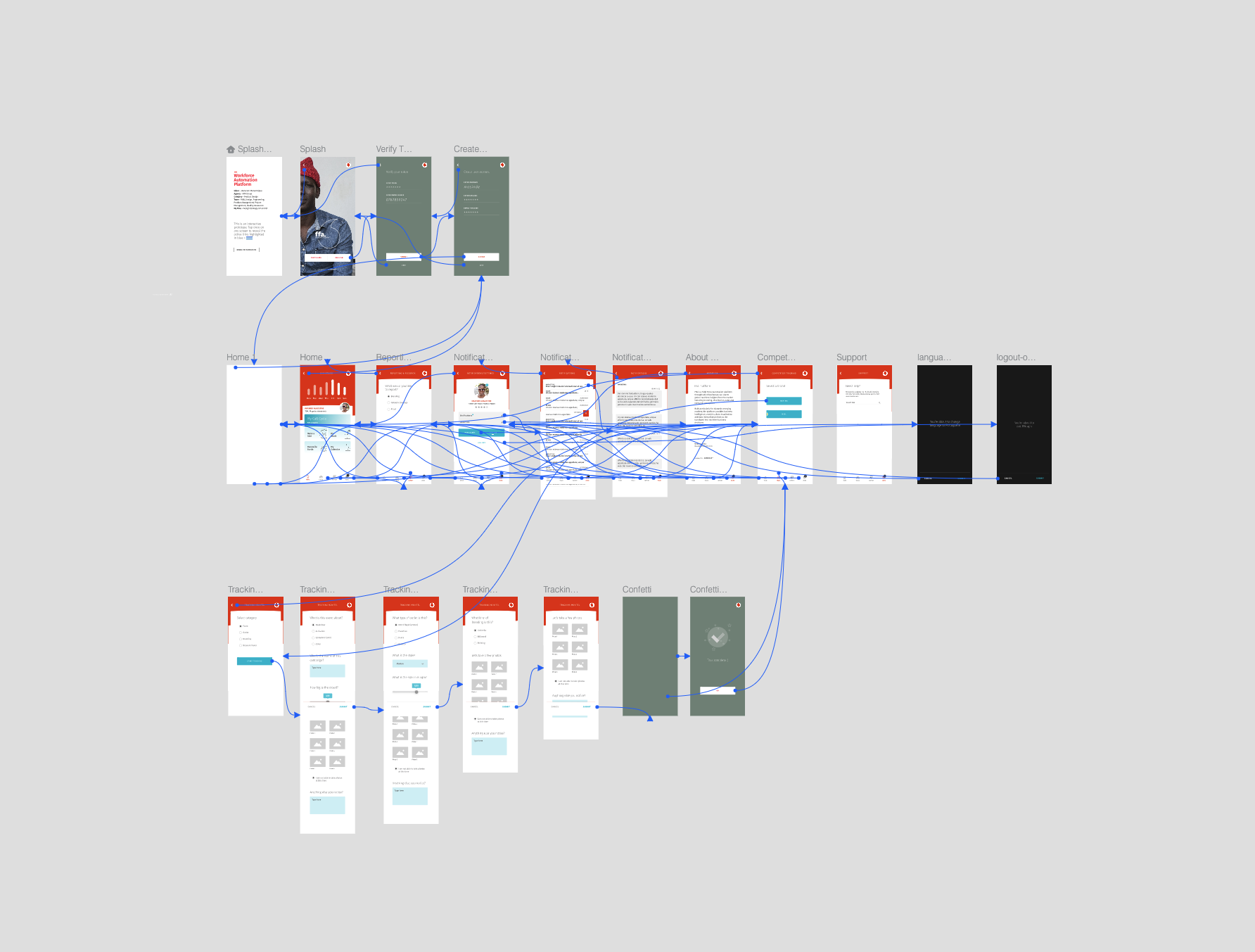
Consequently as we gathered more insights I moved on to high fidelity wireframes and user flows that we could now use to do our first tests with the R&D team.
design and prototyping
At this stage we were now ready to commit to design of a working prototype so as to do more realistic tests. The image below shows a simpler version of the prototype with just a few screens. It is in this environment that I am able to see a clear user flow and interactions.
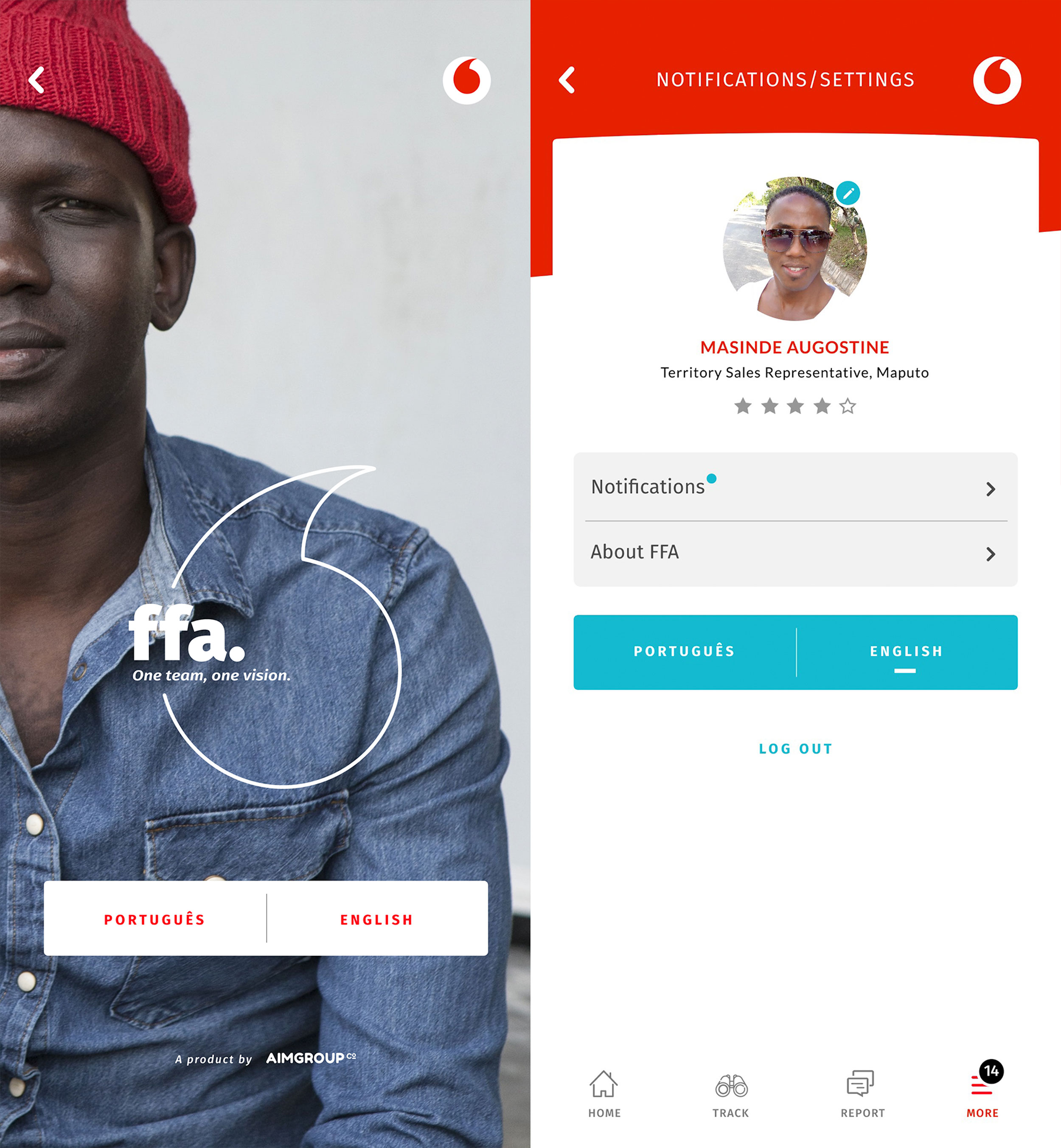
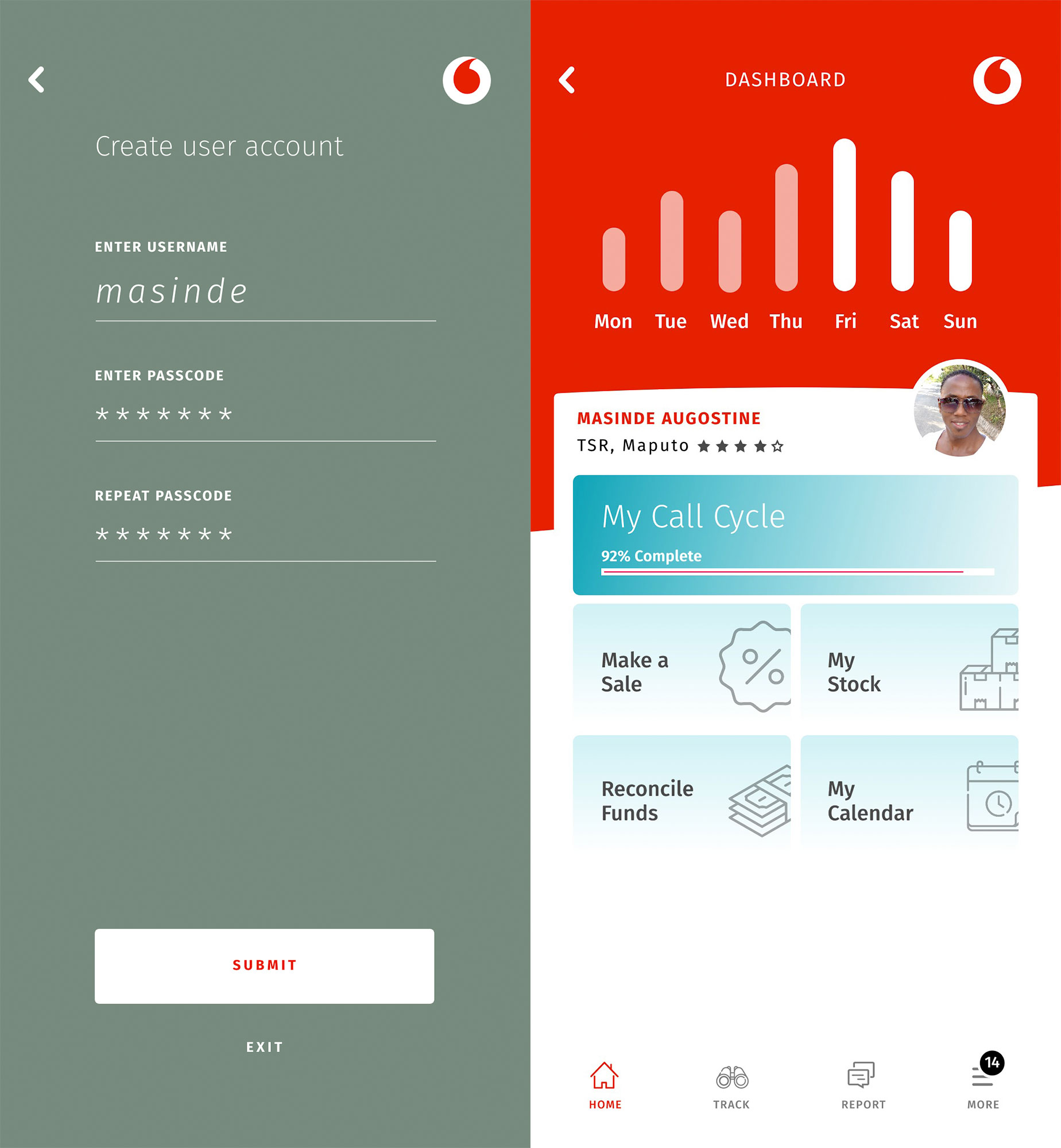
Live prototype
Lastly, I moved to the prototyping environment (Invision) and created a near final version of the product with interactions. This immersive experience helped us do more realistic tests with users and learn before hand-over to the product dev team.
Below is a short video of the final prototype.